For Growers
MAHER JABADO
HYDRANGEA

Info updated by Maher Jabado on Dec 08-2006;
;
This page will be divided in 2 parts:
A) Table of varieties that will be shipped this year along with pictures and characteristic
B) General recomendations on how to take care of the plants from when these are received;
A) Varieties to be shipped DEC 06 (For a COMPLETE list of vars press here)
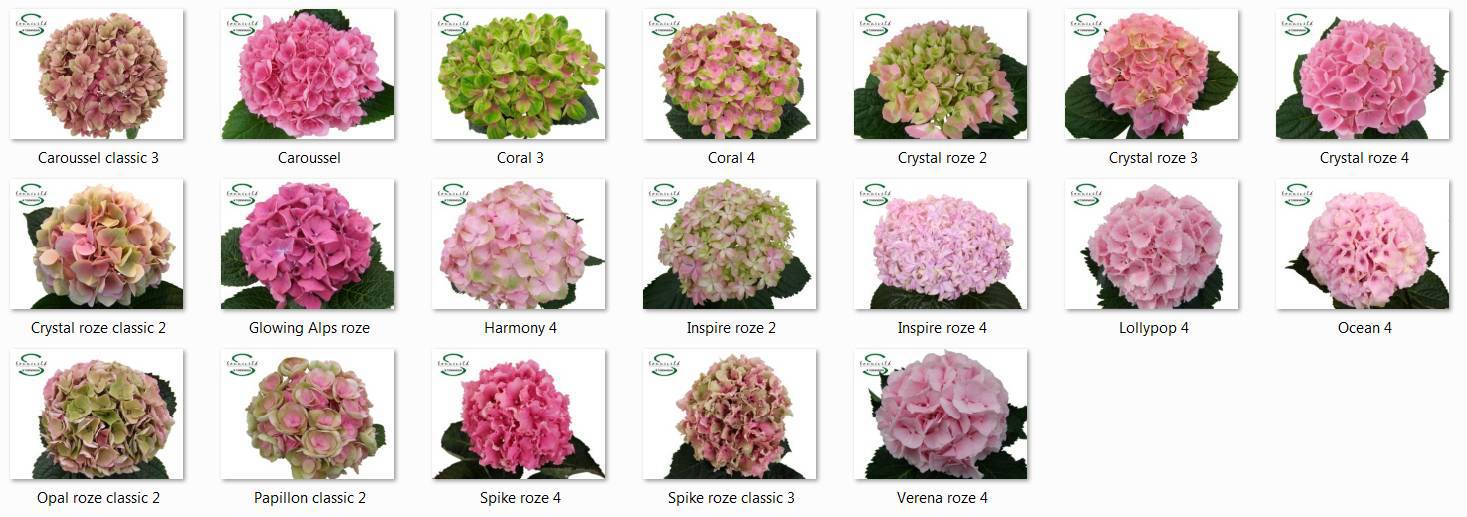
Name(click to see photo) Color Aver # wks to flowering Special notes Leuchtfeuer Red Early- about 8 weeks 7+ branches |Schone Bautznerin Red About 9 weeks 7+branches Doris Dark Red V.Early 7-8 weeks 6+ bran. Dark red Red Ace LZS Red+white border 8 weeks 6+bran with white Freudenstein Dark Pink 8-9 weeks 6+ bran Dark pink Rosita Pink Early 7-8 weeks 7+ branches Forever youmeone Pink double flower 8-9 weeks NEW Double FL Eternity youmetwo Pink double flower 8-9 weeks NEW Double Fl Emotion youmethree Pink double flower 8-9 weeks NEW Double FL Passion youmefour Pink double flower 8-9 weeks NEW Double FL Romance youmenine Pink double flower 8-9 weeks NEW Double FL Renate Steiniger Dark blue Early 7-8 weeks 6+ brac. Dark blue Adria Dark blue 8 weeks 7+ bra, compact plant Elbtal LZS Blue Late 9-10 weeks 7+branches Schöne Bautznerin (bleue)
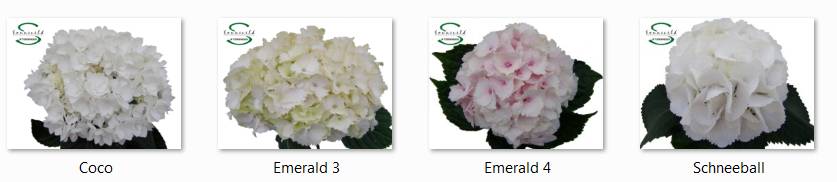
Violet Late 9-10 weeks 6+ bra. Dark Violet Bela LZS Dark Blue Late 9-10 weeks 6+ bra. Dark blue Nymphe White 8-9 weeks 7+bra. White Schneeball LZS White 8-9 weeks 7+bra. White larger
B) General Recommendations:
IMPORTANT: The info stated below is to be used as recommendation only. Pls try and modify it according to your conditions(environment/experience).
I will be very happy that you send me questions or comments .
1)General notes:
-Hydrangea are WATER LOVING Plants. That means they MUST be watered frequently. That is VERY critical for the success of that plant. Even short period of dryness specially during flowering can be simply CATASTROPHICAL and irreversible.
-Hydrangea are grown under cold temp in oct and nov and dec so that they can be FORCED at the conditions of the Middle East to flower at higher temp . That means, you receive the hydrangea as pre-treated for cold and ready to grow and flower at local temp (15c-25c been the optimum range).
-Temperature: As mentioned above range of 15-25 is optimum; For those who want more accuracy:
The optimal temperature is 19°C which can be lowered to control growth; I recomend a day temperature of 18° and a night temperature from 20°C.
Toard the end of the culture it is better to decrease the temperature around 2 to 3°C (so about 15 during the day . That will lead to a better flower size and longevity and a more stable structure
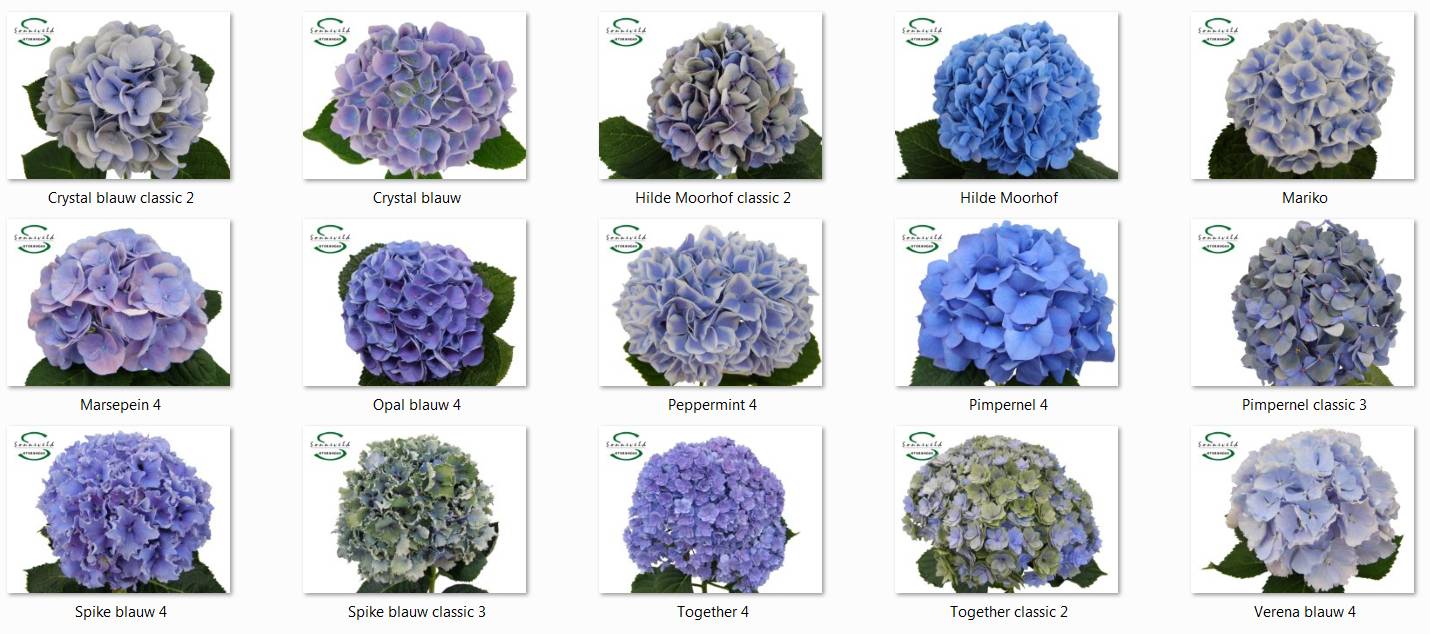
-There are many colors of flowers available for Hydrangea. The blue ones originate from pink and usually are treated once or twice with Aluminum sulfate (included in the shipment at dose recommended on the bag; Usualy the rate is 1,5% (that means 15g/1L water, with this 1L water you can drench 10 pots size 16) ) . Treatment should be within 2-3 weeks of plants receival and BEFORE the time when size of flower bud equals a pea) and NOT after that stage. If you wish you can avoid treating the plants with that chemical but the blue color will be light blue. With the chemical the blue will be dark blue. You can actually play with the chemical so that you try several concentrations and thus get several colors of blue. Recommendations: Make sample trials.
Special note on the Blue Hydrangea: The blue color will NOT develop or will have lighter color and not dark blue(even when treated with Aluminum sulfate) IF the ph of the potting soil is above 6. Optimum ph for the BLUE hydrangea is about 4.5
-Fertilizer: The increase of Nitrogen at the start is suitable for faster plant growth specialy that during hibernation the plants have lost lot of N and hence ned larger supply upon plant receival; Pls keep in mind that SAB SUBSTRATE 1 (Highly recomended) includes the needed initial level of N (and other fertilizer elements) for better results. The increase in P and K toward flowering will improve quality of flowers. You need to be careful that level of fertilizer will affect acidity of the soil and that will affect also the color of the flower among others. Moreover, Hydrangea love potting soil mix that tends toward the acidic reading. It would be excellent to monitor the level of fertilizer in the soil to give optimum conditions but that might not be needed for small quantities grown.
Pls note that Hydrangea are also in ned for Iron (Fe) specialy at the early stages of growth; SAB Substrate 1 includes that initial level needed but in other mixtures you need to fertilize early with Iron (Fe)
Special note for the blue Hydrangea: Pls keep in mind that some studies show the P (Phosphorus) counteracts the Aluminum Sulfate; Thus pls use less P when fertilizing the blue Hydrangea; that is specialy true the first 4 weeks after plants receival;
2)Practical work:
-You will generally receive the plants in pot 14cm and with 6+ branches (larger pre-finnished plants come with more branches and are in larger pots but also are more expensive);
-Upon receiving the plants, it is IMPORTANT to transplant them into larger size pots of 20 cm . The soil MUST BE WET. That will give your plants more space to grow and will help to avoid branch breaking when flowering starts (plants might fall on its side when pot is small and branches with flowers are heavy). Also the larger size pots will give you more money as sale price at the end (BUT that does NOT mean you grow teh plants in larger than 20 cm pots... That will make plants ugly because they will be small as compared to teh larger size pots. Pot 20 is the optimum for 6+ branches)
-During transplanting you must be VERY careful in handling the plants because they tend to lose easily some of its branches and some of the flower nodes present at that time on the stems. DO NOT CUT back on any branch. Otherwise you cut some of the flower buds developping.
-IMPORTANT: The new peat/soil medium you use must be clean and best use pre-mixed medium such as the SAB Substrate 1 from SAB/Plantaflor . You can use your own mixture but keep in mind that soil must be well treated against fungus and that soil must NOT be basic in ph (usually the soil we have in Lebanon/Syria/Jordan/Egypt is very basic). Some soil used as clay soil (at low percentage of total soil i.e 20%) was found to be beneficial because it helps holding some water and fertilizer. BUT NOT OVER 20% of total mixture or else plant will NOT have many of the elements needed and that are available only in acidic soil.
-After transplanting, DRENCH the plants with a good fungicide. I recommend strongly the mixture of Benlate and Ridomil. You need to repeat that treatment after 2 weeks from transplanting.
-Water the plants as frequently as needed and avoid at ALL time any dry soil.
-AGAIN AND AGAIN DO NOT CUT or pinch any of the branches or do not make any stem cut back. Any of these will damage the flower buds present on the branches and will decrease quality.
-Fertilizer: As mentioned above; I recommend higher level of N at the beguining for about 4 weeks and then gradual decrease of N and gradual increase of P and K for the period ending when plants show full bloom. Avoid ANY fertilizer on the leaves because that tends to damage the sensitive leaves. That is very true SPECIALY when plants are in flowering. The flowers MUST never be subject to water or moisture. Because it will leave residue on the petals and that will deteriorate the look. Also any water on the flower can help increase Botritis whic you do not need at that stage.
-When plants are in flowering stage, you might need some good ventilation to avoid high humidity in the air. The high Humidity can cause Botritis which will damage the flower VERY fast. A nice looking plant can be damaged within hours of Botritis growth.
-Growth regulating hormones: B-Nine or Alar is used by many growers, I recommend its usage for customers who have more than 500 plants and have tried the products in the past and so are familiar with its usage. That does NOT mean the small growers cannot use it. It is very beneficial to use at least once when side shoots are at 3-5 cm in size. You will need to make a spray of Alar with fine sprayer and at the rate of 1500 ppm (see the lable on the bottle for the exact mixture to get such rate). The spray of Alar must be made in early evening when temp is NOT high and when plants are not thirsty for water. Such treatment helps in making the plants look more compact and stronger and will also give chance of lower shoot to grow to size of upper shoots leading to uniform flowering at the top of the plant.. Also Alar will help plants look GREENER.
-Aluminum Sulfate treatment: As mentioned in the general intro, this is used on the blue color plants to make them darker in color.You can really make lot of mixed blue color playing with that chemical. You must NOT use it when plants are in flowering buds larger than a pea in size. You need to use that chemical only once or twice to have the positive darker blue effect.
-Lighting: Hydrangea plants like indirect sunshine such as the one seen under greenhouses with slight sun reflector. Low light intensity is bad because plants will tend to stretch and yellowing of leaves will occur with smaller flowers developing. However high light intensity could damage the quality of the leaves specialy for some sensitive varieties and can cause higher temp in the greenhouse which leads to faster evaporation and water shortages thus damaging the plants.
-Using sticks to support the branches: It is highly recommended that you support branches with sticks. That support is best done when flower buds are seen but BEFORE full flower development to avoid damaging of flowers. These sticks are available at disva at low cost. For any further info needed pls do not hesitate to contact me
-
Spraying basics
1. It is best to use any type of spray in the early morning or the cool of evening. Do not spray when temps are above 27 C
(80 degrees Fahrenheit!) Your plants may
"burn" or have a reaction to what
you are using in excessive heat. This is
known as "phytotoxicity."
2. Always perform a test on a small portion
of the plant material first. Wait 24 hours
to observe any negative reaction. Proceed
if there is no damage.
3. Really and truly...more is not better.
If you are not getting good results don't
increase the strength of these remedies without
testing first.
4. Target just the area you need to treat.
Be careful... try not to harm the good guys!
You don't want to run off your allies.
5. When working with sprays or dusts always
protect your exposed skin and face. Some
of these ingredients can be very irritating
to your skin, eyes and mucous membranes,
especially any hot pepper sprays.
SUMMARY INFO:
Hydrangea
1)General growing guides:
Hydrangea produces large clusters of pink
or blue flowers in the spring. Grow the plant
in moderately bright
light. Adequate watering in spring promotes
formation of large flower heads. Give lot
of water starting from when you receive the
plants for forcing in December and begin
fertilizing when the plants are actively
growing.
N.B: Before you have received the plants;
theses were already treated for cool temp
(Temperatures below 15 degrees C for 6 weeks
initiate flower buds). Then plants are defoliated
and given 6 weeks of complete darkness at
temperatures between 5and 10 C degrees.
Forcing requires 3 months of 15 C degree
nights and 18-20 C degree days.
GENERALY, A soil pH is between 4.5 and 5
and little or no phosphorous gives blue flowers
(you also have received Aluminum Sulfate
that push the blue var plants into darker
blue color). Pink flowers result from a soil
pH of 6.3 to 6.5 and high levels of phosphorous.
2) General diseases:
a)Cultural Problems : Specific light requirement
. Needs lot of light (when plant is developping)
but no direct hot sun.
b)Environmental Problems: Mostly Nutrient
deficiency (iron), in many cases caused by
ph and ec of soil mixture used.
c)Disease Problems
-Bacterial blight :no chemical control
-Blight, fungal leaf, bud & blossom :
Control - benomyl
-Bud blight : control - benomyl
-Leaf rust : control - chlorothalonil
-Leaf spot, fungal : control - benomyl, copper,
chlorothalonil
-Powdery mildew : control - benomyl, lime-sulfur
-Scorch : no chemical control
d)Insect Problems
-Aphids: control - diazinon, acephate, insecticidal
soap
-Scales: control - adults: superior oil
-crawlers: diazinon, carbaryl, pyrethrum,
acephate, malathion, superior oil,
-Spider mites : control - malathion, superior
oil, insecticidal soap,
BLUE
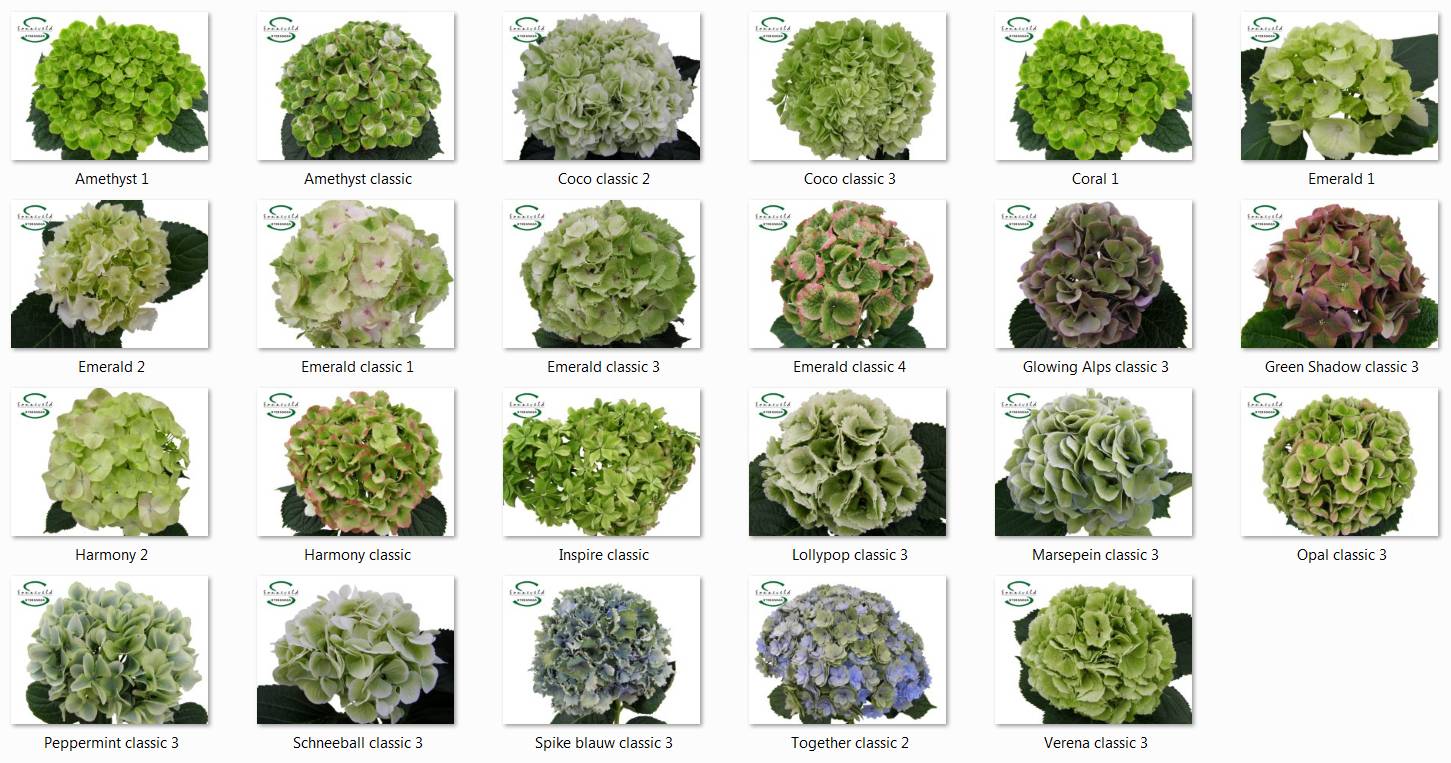
GREEN
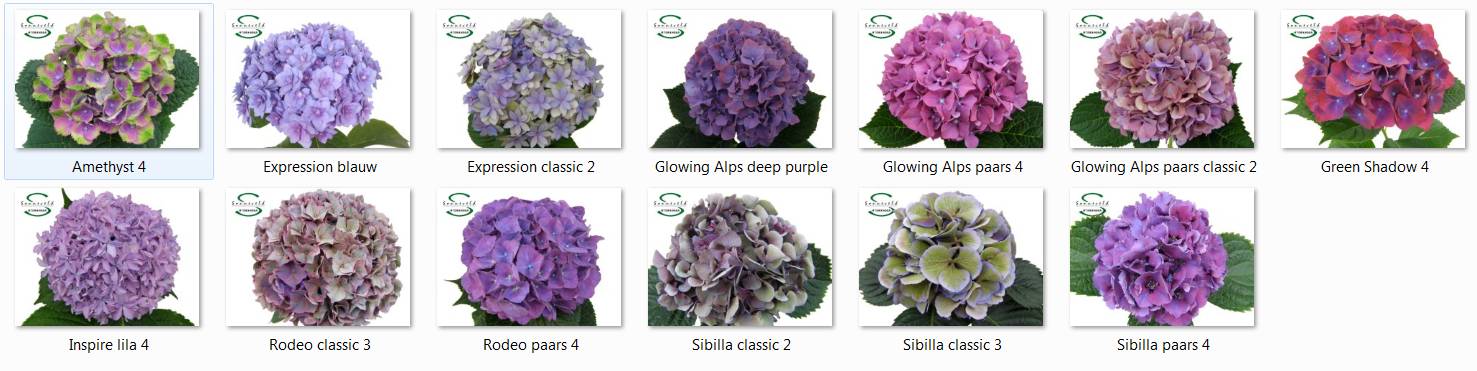
BLUE
Bicolour
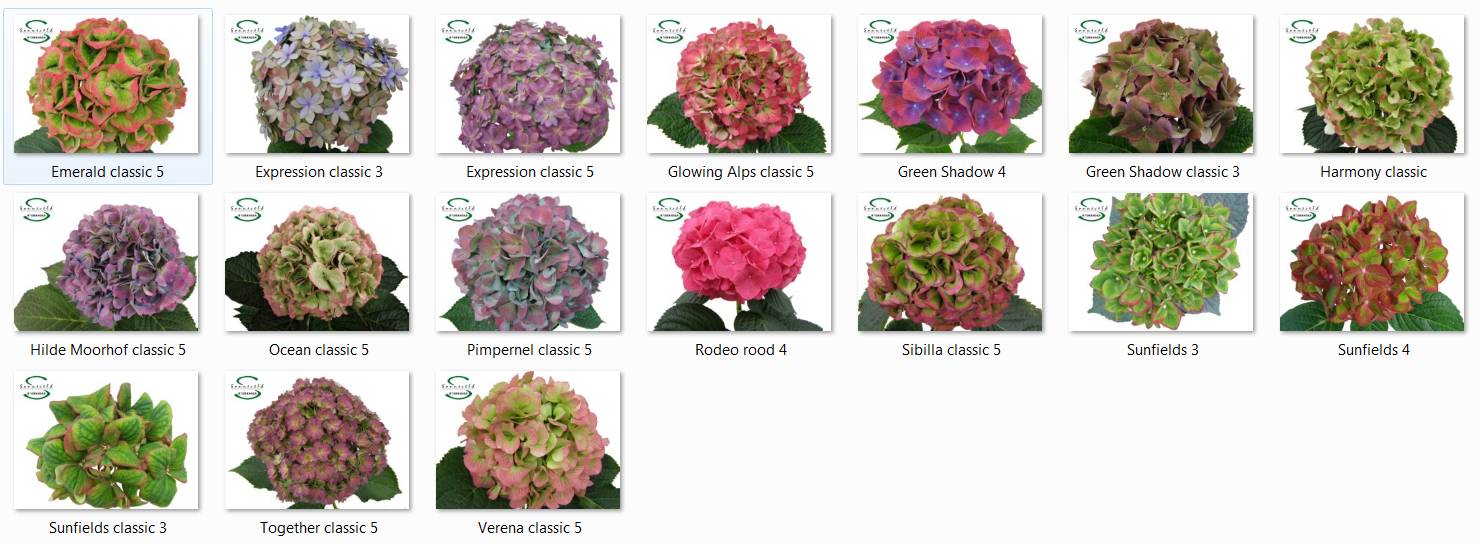
PINK
WHITE
Regards,
Alex Bandel
Regards, Maher Jabado